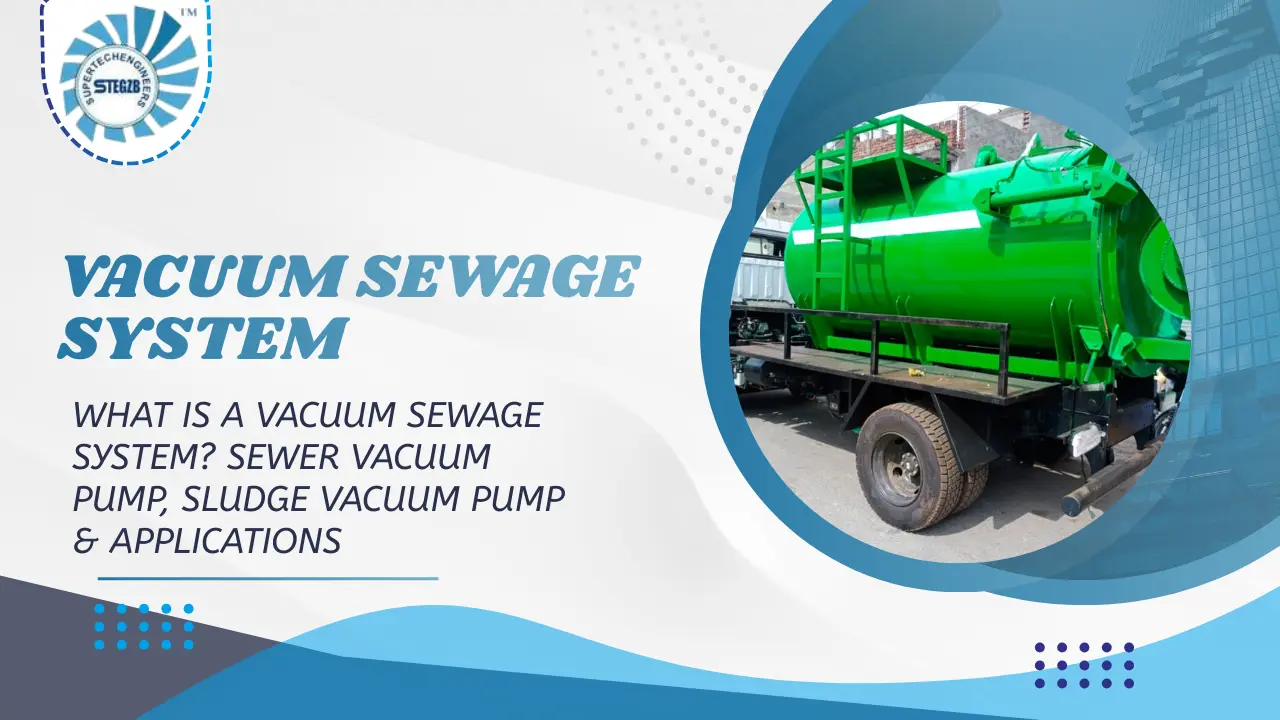
Modern cities and industrial facilities face growing challenges in managing sewage and wastewater efficiently. Conventional gravity-based sewer systems often require deep excavation, large pipelines, and frequent maintenance. To overcome these limitations, the Vacuum Sewage System has emerged as an advanced and reliable solution. At Supertech Engineers, we provide high-performance vacuum-based wastewater handling solutions designed for efficiency, safety, and environmental sustainability.
This blog explains what a vacuum sewage system is, how it works, the role of sewer vacuum pumps, sludge vacuum pumps, and the wide range of applications across industries and infrastructure projects.
What Is a Vacuum Sewage System?
A vacuum sewage system is an advanced wastewater collection and transportation system that uses negative pressure (vacuum) instead of gravity to move sewage from collection points to a centralized treatment or disposal facility. Unlike traditional sewer systems, this system does not rely on slope or deep underground pipelines. Vacuum sewage systems are especially useful in areas where:
- Groundwater levels are high
- Terrain is flat or uneven
- Excavation is difficult or expensive
- Environmental protection is critical
By using controlled vacuum pressure, sewage is transported efficiently through small-diameter pipelines with minimal leakage risk.
Also Read:
How Does a Vacuum Sewage System Work?
The working principle of a vacuum sewage system is simple yet highly effective.
Step-by-Step Working Process
- Collection Chambers- Sewage from buildings or industrial units flows into vacuum collection chambers installed at strategic points.
- Vacuum Interface Valves- When sewage reaches a predefined level, the interface valve opens automatically.
- Vacuum Transportation- Due to negative pressure created by a sewer vacuum pump, sewage is rapidly sucked into the pipeline and transported to the vacuum station.
- Central Vacuum Station- At the central station, sewage is separated from air and directed toward treatment plants or storage tanks.
This automated process ensures fast, hygienic, and leak-free sewage transportation.
Role of Sewer Vacuum Pump in the System
A sewer vacuum pump is the heart of a vacuum sewage system. It creates and maintains the required vacuum pressure throughout the pipeline network.
Key Functions of Sewer Vacuum Pump
- Generates consistent negative pressure
- Enables long-distance sewage transport
- Prevents backflow and blockages
- Ensures quick response during peak loads
These pumps are designed to handle liquid waste mixed with air efficiently, making them ideal for continuous sewage operations.
What Is a Sewer Suction Pump?
A sewer suction pump is commonly used for removing sewage from pits, manholes, septic tanks, and low-lying areas. While often used interchangeably with sewer vacuum pumps, sewer suction pumps are typically employed for: Emergency sewage removal, Maintenance and cleaning operations, Temporary sewage handling. They work on suction force to lift and transfer sewage where gravity flow is not possible.
Sludge Vacuum Pump: Handling Thick Waste Efficiently
In sewage systems, sludge handling is one of the most challenging tasks. This is where a sludge vacuum pump plays a crucial role.
What Is a Sludge Vacuum Pump?
A sludge vacuum pump is specially designed to handle thick, viscous, and solid-laden waste such as: Settled sludge, Industrial slurry, Biological waste, Grease and sediments. These pumps are built with robust materials and special impellers to prevent clogging and wear.
Benefits of Sludge Vacuum Pump
- Efficient sludge removal
- Reduced manual cleaning
- Safe handling of hazardous waste
- High durability and long service life
At Supertech Engineers, our sludge vacuum pumps are engineered for heavy-duty industrial and municipal applications.
Advantages of Vacuum Sewage System
Vacuum sewage systems offer multiple advantages over conventional sewer networks.
- Minimal Excavation- Small-diameter pipes and shallow installation reduce civil construction costs and project timelines.
- Leak-Proof & Environment Friendly- Vacuum systems operate under negative pressure, so leaks pull air inward instead of pushing sewage outward—preventing contamination.
- Flexible Design- Pipelines can run horizontally or uphill, making them ideal for complex terrains.
- Lower Maintenance Costs- Reduced blockages and self-cleansing pipeline flow result in minimal maintenance.
- High Operational Efficiency- Fast sewage transport and automated control improve overall system reliability.
Applications of Vacuum Sewage System
Vacuum sewage systems and associated pumps are widely used across various sectors.
- Residential & Commercial Complexes- High-rise buildings, townships, and malls use vacuum systems where gravity flow is impractical.
- Industrial Facilities- Industries with high wastewater or sludge generation benefit from sludge vacuum pumps and sewer suction pumps.
- Airports & Metro Stations- Large public infrastructure projects rely on vacuum sewage systems for hygienic and efficient waste management.
- Hospitals & Healthcare Facilities- Safe and sealed sewage handling is critical in hospitals to prevent contamination and infections.
- Marine & Offshore Applications- Ships, ports, and offshore platforms use vacuum sewage systems due to limited space and environmental regulations.
- Municipal Sewer Maintenance- Sewer vacuum pumps and sewer suction pumps are used for cleaning manholes, drains, and underground sewer lines.
Vacuum Sewage System vs Conventional Sewer System
| Feature | Vacuum Sewage System | Conventional Sewer |
|---|---|---|
| Transport Method | Vacuum pressure | Gravity |
| Pipe Size | Small diameter | Large diameter |
| Excavation | Minimal | Extensive |
| Leak Risk | Very low | High |
| Maintenance | Low | High |
This comparison clearly shows why vacuum sewage systems are gaining popularity in modern infrastructure projects.
Why Choose Supertech Engineers?
Supertech Engineers specialize in designing and supplying high-quality vacuum sewage systems, sewer vacuum pumps, sewer suction pumps, and sludge vacuum pumps tailored to customer requirements. Our Strengths:
- Advanced engineering solutions
- High-efficiency pump designs
- Durable and corrosion-resistant materials
- Custom-built systems for varied application
- Reliable after-sales support
Our sewer suction machines are manufactured to meet international quality standards and ensure long-term operational reliability.
Conclusion
A vacuum sewage system is a smart, efficient, and environmentally friendly solution for modern sewage management. With the use of advanced sewer vacuum pumps, sewer suction pumps, and sludge vacuum pumps, wastewater and sludge can be transported safely and efficiently, even in challenging conditions. As urbanization and industrial growth continue to rise, adopting vacuum-based sewage systems is a future-ready approach. With expertise and innovative solutions from Supertech Engineers, you can ensure hygienic sewage handling, reduced maintenance costs, and sustainable wastewater management.